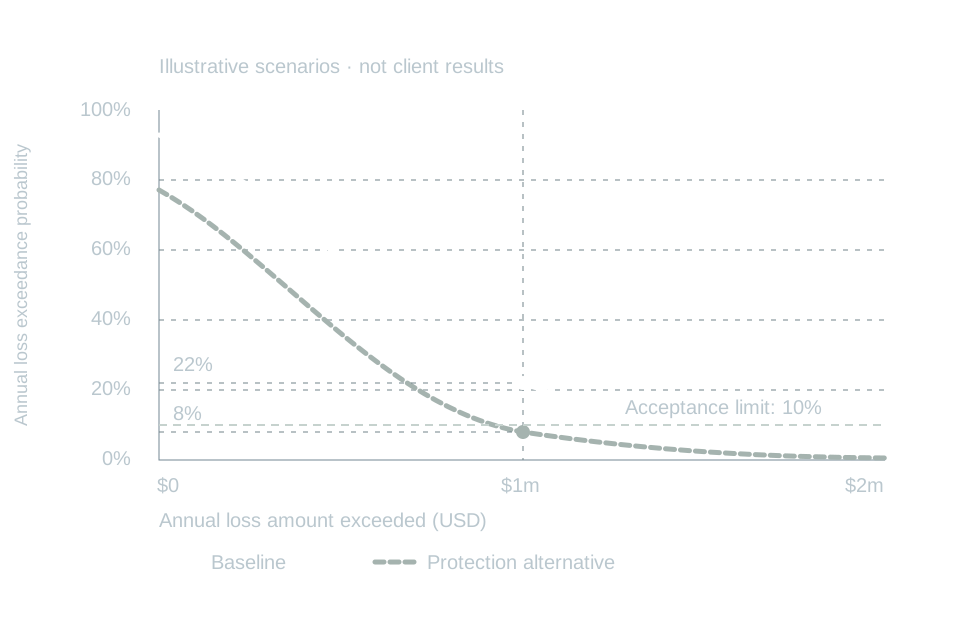

Risk + protection requirements
Define what matters and how much risk management is prepared to carry.
Why a decision discipline is needed
Without a disciplined chain, appetite and tolerance become late-stage labels, technical evidence cannot be compared economically, and protection choices are difficult to authorize. RDCD restores the correct order.
Appetite and tolerance are governance inputs, established by management near the start—not a late checkpoint after quantification.
Define what matters and how much risk management is prepared to carry.
Design and compare the capabilities that can change the quantified exposure.
Authorize, maintain, and revisit the decision as conditions change.
The quantitative spine
Loss-exceedance curves keep the message simple: establish current exposure, model how capabilities change it, then test residual exposure against management tolerance and lifecycle cost.
Every RDCD step can be delivered as an applied course, workshop, coached analysis, or train-the-practitioner module using the organization’s own decision context.
Set value, attributes, appetite, tolerance, decision rights, and review conditions.
Build FAIR scenarios, estimate distributions, calibrate evidence, and communicate uncertainty.
Use FAIR-CAM and inside-out design to translate risk requirements into capabilities.
A clear next move
Marcriis will shape the right combination of consulting, quantitative analysis, engineering, and capacity building.